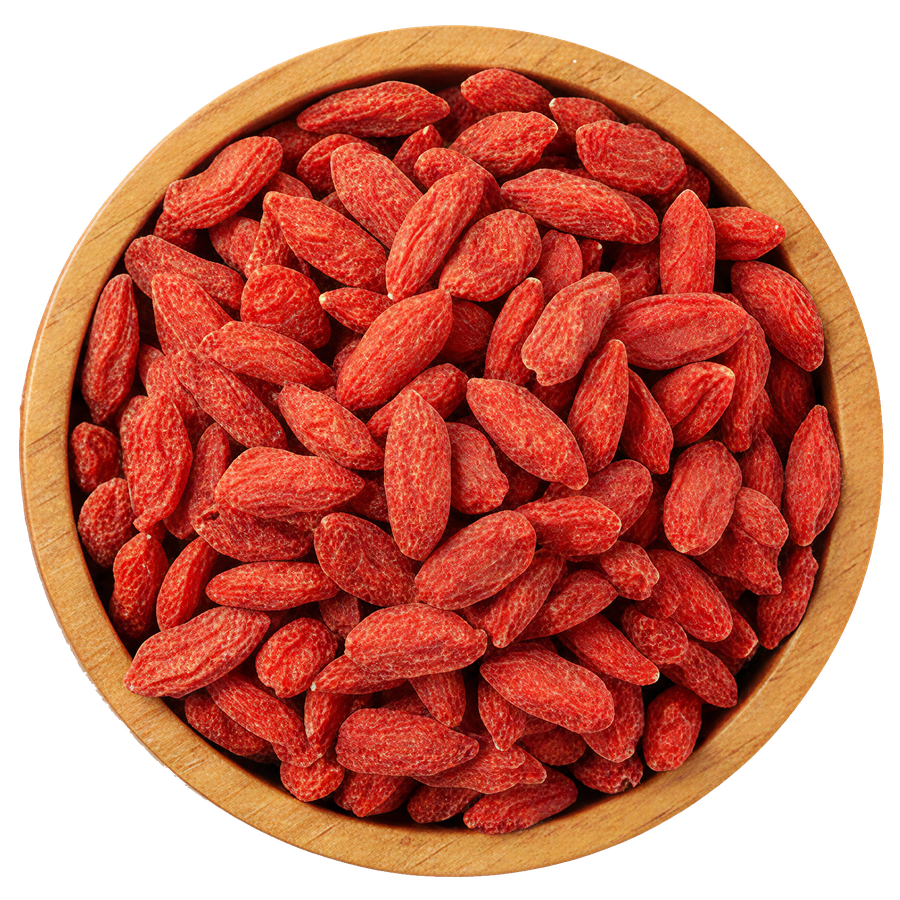
Dried Lycium berries from traditional East Asian food-medicine culture — carotenoid-rich dried fruit that needs drug-interaction humility and sugar-portion honesty.
Educational label — not a prescription. Superfoods and nutrient-dense whole foods are discussed here as nutritional and traditional literacy — composition, physiology, quantified food data, and orthomolecular/condition conversations found in Levy, OMNS, DoctorYourself, and related nutritional literature. This is not medical advice, not a claim that any food cures disease, and not a reason to stop prescribed medicines. Powders and extracts are not identical to whole-food portions. Contaminant quality varies — choose tested suppliers. Consult a qualified clinician before therapeutic use — especially if pregnant, on anticoagulants, have gallbladder/bile-duct issues, kidney disease, or known food allergies.
What Goji berries is
Goji berries (Lycium barbarum / L. chinense) is filed in the Journey2Health superfoods library as a berry-class educational food — studied for composition, traditional use, and nutritional physiology, not marketed here as a cure.
Primary compositional themes to hold in working memory: zeaxanthin/carotenoids, polysaccharides discussed in traditional literature, modest protein for a dried fruit, natural sugars. Those molecules and matrices explain most honest kitchen and literature conversations about this food.
Usually sold dried; also powders and juices. Traditional Chinese food-herb framing is not the same as FDA drug approval — keep lanes clear.
Cross-link discipline: every time a vitamin, mineral, amino acid, spice, or condition is named, follow its library page. Foundations remain vitamin C, magnesium, vitamin D, zinc, and the amino acids hub — novelty foods do not outrank them.
Powders, juices, extracts, and sweetened café products are not interchangeable with the whole-food grocery form described in USDA rows. When labels add sugar, maltodextrin, or proprietary blends, you leave the NDB teaching row.
Image policy on this site: only already-local Adobe/RF-licensed artwork is used. Placeholder panels remain until a licensed file is placed in assets/images/superfoods/ — we do not scrape unlicensed images.
Physiology & human context
Human physiology meets goji berries at the level of digestion, absorption, cofactor ecology, and meal context — not at the level of Instagram ORAC rankings.
Carotenoids contribute to vitamin A activity literacy (conversion variable). Eye-nutrition marketing often cites zeaxanthin — still food, not a substitute for ophthalmic care.
Digestion & matrix: fiber, fat, and protein fractions change gastric emptying and the glycemic appearance of accompanying carbohydrate. Seed gels, berry skins, leaf powders, and rhizome starches each behave differently — which is why kitchen form (whole vs juice vs extract) is a physiology topic, not merely a recipe preference.
Micronutrient cofactors named on this page (magnesium, zinc, iron, copper, selenium, iodine, manganese, potassium, calcium, phosphorus) participate in enzyme systems far beyond any single “superfood.” Deficiency or excess of those minerals is diagnosed clinically — food pages teach patterns.
Redox literacy: polyphenols and pigments can participate in antioxidant networks in vitro; in vivo effects depend on dose, metabolism, and the rest of the diet. Thomas Levy’s educational oxidative-stress framing repeatedly returns to adequate ascorbate as a primary redox nutrient, with colorful plant polyphenols, seed fats, and mineral cofactors as supporting terrain — not as replacements for foundational C, magnesium, vitamin D, and zinc literacy. OMNS and DoctorYourself archives echo the same hierarchy: food density matters; megadose folklore without context does not.
Amino-acid adjacency for protein-contributing foods: evaluate lysine, leucine, tryptophan, methionine, and related essentials via the amino acids library rather than assuming any plant powder is “complete” in isolation.
Endocrine & drug-adjacent humility: concentrated powders and extracts can introduce hormone-marketing claims or pharmacokinetic interactions (e.g., piperine, vitamin K swings, anticoagulant lore). Culinary teaspoons and clinical capsules are different tools — clinicians own the second.
Food forms vs powders vs extracts
Educational forms of goji berries you will meet in commerce:
Whole grocery form — seed, berry, leaf, rhizome, or cooked grain-like seed as applicable; closest to traditional food use and to many USDA rows.
Frozen unsweetened pulp / IQF fruit — useful preservation when sugar is not added; still check panels.
Dried fruit or dried leaf — concentrates sugars/calories (fruit) or micronutrients (leaf); portion carefully.
Powders — convenience and concentration; demand contaminant testing; teaspoons ≠ 100 g textbook tables.
Oils / extracts / standardized capsules — different dose and safety stories; not silently interchangeable with food teaspoons. Turmeric extracts especially must be read beside spice turmeric cautions.
Sweetened café bowls / bars — often dessert energetics wearing a superfood costume.
Journey2Health product-linking rule: AOR pure singles are linked only when verified on the AOR inventory for vitamin/mineral pages. Superfood pages generally stay food-form educational unless a verified single exists — we do not invent URLs.
Orthomolecular / nutritional uses
Orthomolecular and nutritional-literacy framing (Levy, OMNS, DoctorYourself tradition alongside NIH/USDA):
DoctorYourself-type food lists may include goji among colorful fruits; Levy ascorbate hierarchy still governs oxidative-stress education.
Condition names are map markers into the conditions library — not diagnoses and not cure claims.
Pharmaceutical-funded literature often under-represents food-form nutrients; nutritional literature remains educationally relevant per site disclaimer.
Thomas Levy’s educational oxidative-stress framing repeatedly returns to adequate ascorbate as a primary redox nutrient, with colorful plant polyphenols, seed fats, and mineral cofactors as supporting terrain — not as replacements for foundational C, magnesium, vitamin D, and zinc literacy. OMNS and DoctorYourself archives echo the same hierarchy: food density matters; megadose folklore without context does not.
Traditional stamina/eye food lore appears in ethnobotany — not a license to treat macular disease or infertility. Anticoagulant interaction concerns appear in safety literature — clinician territory.
No cure claims
Condition names map how nutritional literature discusses foods. Presence here is not a diagnosis tool and not evidence that this food treats, cures, or prevents disease. Never stop prescribed medicine because of a superfood page.
If symptoms are acute, severe, neurologic, cardiac, obstetric, or infectious, seek clinical care first. Food literacy is parallel education, not triage.
Demand contexts & when it helps literacy
When does interest in goji berries rise in educational nutrition conversations?
Plant-forward eaters seeking denser micronutrient or polyphenol foods without jumping straight to megadose pills.
Kitchen pattern upgrades (breakfast bowls, stews, smoothies) where a spoonful changes fiber, pigment, or mineral pinches.
Traditional-food curiosity — ethnobotany literacy rather than trend chasing.
Athletes and high-output days looking for food calories + minerals — still secondary to total energy, protein, fluids, sleep, and foundational magnesium/vitamin D/vitamin C adequacy.
When it is not the right first lever: acute illness triage, unexplained bleeding, suspected hemochromatosis or Wilson pathways without labs, pregnancy megadoses, or replacing prescribed anticoagulants/thyroid/psychiatric medicines with powders.
Carotenoids contribute to vitamin A activity literacy (conversion variable). Eye-nutrition marketing often cites zeaxanthin — still food, not a substitute for ophthalmic care.
Quantify first, romanticize second: open the USDA/FDC row, scale to the spoon you use, then decide if the food earns a permanent place in recipes and grocery rotation.
Household figures below are scaled from USDA SR28 (same underlying USDA dataset historically shown on nutritiondata.self.com). Re-check values on nutritiondata.self.com when available, or via USDA FoodData Central. Brand powders and extracts are not identical to the whole-food NDB rows cited.
Goji, dried — household handful (~28 g): energy often ~100 kcal class; carbohydrate/sugar dominant; carotenoids notable; vitamin A RAE depends on conversion; some vitamin C retained when carefully dried — verify FDC/brand assays. Protein a few grams — not a protein food.
Vs fresh berries — drying concentrates sugars and calories per chew.
Lysine or other amino figures shown are completeness markers from local SR28 extracts where available — full essential panels: confirm on FDC/nutritiondata.
Meal synergies & nutrient cross-links
Meal-pattern synergies that keep this food honest inside a day:
Vitamin C–rich produce with plant iron sources (leaf powders, seeds, legumes).
Fat-soluble partners: culinary fat with carotenoid foods; vitamin K / vitamin D / vitamin A adjacency where relevant.
Spice library overlaps when cooking: turmeric/pepper/ginger/cinnamon as applicable — see linked spice pages.
Anti-patterns: juice-only patterns that drop fiber; sugar-bowl costumes; stacking five powders while skipping sleep, protein, and foundational micronutrients on My Protocol education.
Kitchen uses
Soak and add to porridge/trail mixes; steep in teas; pair with ginger. Mind sweet dried-fruit portions.
Practical teaching sequence: (1) buy the least-processed form you will actually eat; (2) portion with a spoon/cup, not vibes; (3) combine with foundational foods; (4) notice GI tolerance for 3–7 days before escalating; (5) stop for allergy signs.
Recipe literacy belongs on Recipes as that section grows; this page stays composition/physiology/education-forward.
Savory: rhizomes and leaf powders in soups/stews; quinoa as side.
Smoothies: prefer water/unsweetened milk bases; fruit for sweetness before syrup.
Storage: cool, dry, dark for oils/seeds; freeze berries; refrigerate fresh root.
Historical & cultural notes
East Asian culinary-medicinal berry with centuries of traditional use; Western “superfruit” branding is recent.
Ethnobotany teaches respect for origin cultures and for ecological costs of sudden global booms (price shocks, monocultures, greenwashing). Educational use includes that humility.
Modern clinical nutrition borrows traditional foods carefully: mechanisms, doses, contaminants, and evidence quality must be restated in contemporary terms — which is why USDA/FDC numbers and OMNS/DoctorYourself essays both appear in references.
Cautions
Possible interactions with anticoagulants/diabetes drugs — clinician
Nightshade-adjacent sensitivity individual lore — not universal
Sulfite-treated dried fruit
Pregnancy caution for concentrated herb-like intakes
Education only — not personal medical advice.
Pregnancy, breastfeeding, anticoagulation, gallbladder disease, kidney disease, and pediatric use need clinician guidance before concentrated powders/extracts.
Allergy: stop and seek care for systemic reactions.
Contaminant testing matters for imported powders (metals, microbes, adulteration).
Do not delay diagnosis of anemia, thyroid disease, cognitive decline, or cancer because a superfood blog post sounded hopeful.
Standing disclaimer matches the site footer: nutritional/orthomolecular literature is offered for learning beside publicly available research — not as treatment orders.
Food vs hype — Vit C–depth framing
Journey2Health uses the same depth posture as the vitamin C library: chemistry and composition, human nutritional physiology, quantified food where USDA/FDC allows, historical use, orthomolecular literacy (Levy / OMNS / DoctorYourself), and explicit non-cure labeling. “Superfood” here means a nutrient-dense food that repays study — not a promise of disease reversal.
Ascorbate hierarchy — Colorful plants, seeds, and algae support redox terrain; they do not replace Levy-depth ascorbate literacy when oxidative-stress education is the topic.
Protein & amino honesty — Seeds and algae can contribute protein; still evaluate the day’s essential amino pattern (see amino acids, lysine, leucine, tryptophan).
Pharma-vs-nutrition literature — Standing site disclaimer applies: much clinical funding focuses on drugs; nutritional literature remains educationally relevant even when under-cited in conventional summaries.
Usually sold dried; also powders and juices. Traditional Chinese food-herb framing is not the same as FDA drug approval — keep lanes clear.
How to use this page practically
Treat grocery forms (seed, berry, leaf, root, powder) as foods first — teaspoons and cups, not mystery megadoses.
Health Resources 2026 working disk — Journey2Health educational compilation
Agency, PubMed, and orthomolecular links are starting points for self-education. Always read primary papers in context and consult professionals for personal decisions. Historical and traditional perspectives are education — not DIY treatment orders. Standing disclaimer: educational orthomolecular/nutritional literacy (OMNS, DoctorYourself, Levy tradition alongside NIH/USDA) — not medical advice, diagnosis, or treatment.