An educational walkthrough of twelve kitchen and apothecary plants often grouped in “detox” conversations. Mechanisms vary. Your body already detoxifies through liver, kidney, gut, and skin pathways; plants may support those systems in traditional and studied ways. This is not a cleanse protocol or a disease treatment.
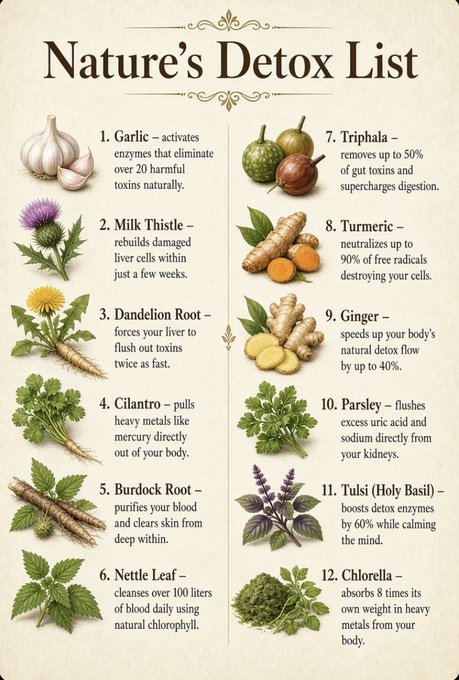
Popular social graphic used here as a topic list only. The percentages and absolute statements on the graphic are not endorsed as clinical proof.
Read this first. Infographic percentages and absolute statements (for example “rebuilds liver in weeks,” “8× weight in metals,” “cleanses 100 liters of blood”) are unverified marketing language. They are not verified clinical endpoints. The sections below teach traditional context, compounds researchers explore, kitchen nutrition notes, and cautions — not prescriptions or cure claims.
Garlic Allium sativum
Popular claim (infographic)
“Eliminates 20 toxins from the body.” These numbers are marketing-style talking points, not verified clinical endpoints.
Educational overview
Garlic has a long culinary and folk history for winter resilience and circulatory folklore. Crushing or chopping releases organosulfur chemistry (notably allicin precursors). Education focuses on food use and cautious reading of antimicrobial and cardiovascular literature — not on counting “toxins removed.”
Compounds / angles studied
Allicin and related organosulfur compounds after cell damage (crushing)
Antimicrobial interest in lab and traditional settings
Cardiovascular and lipid pathway research (results and forms vary)
Antioxidant and sulfur-donor angles in basic science
Nutritional notes
Approximate kitchen nutrition, not lab assay: raw garlic is low-calorie; a clove contributes small amounts of manganese, vitamin C, and B6, plus distinctive sulfur compounds. Used as a flavoring food more than a macro source.
Cautions
May increase bleeding tendency with anticoagulants; GI upset on empty stomach; odor; topical burns from raw paste; surgical teams often advise pausing concentrated garlic before procedures — ask your clinician.
“Rebuilds the liver in weeks.” These numbers are marketing-style talking points, not verified clinical endpoints.
Educational overview
Milk thistle seed extracts are among the most discussed botanicals in liver-support folklore. The flavonolignan complex silymarin is the usual research focus. Human evidence is mixed by condition and product quality; “rebuilds in weeks” overstates what education can responsibly claim.
Compounds / angles studied
Silymarin / silybin antioxidant and membrane-stabilizing interest
Hepatoprotective literature in toxin and chronic-liver contexts (interpret carefully)
Phase II enzyme and inflammation pathway angles in basic research
Nutritional notes
Typically used as a standardized extract or tea, not as a kitchen macronutrient food. Phytochemicals — not protein/fat/carb storytelling — are the reason people seek it.
Cautions
Asteraceae allergy possible; GI upset; theoretical hormone-sensitive interactions; may affect drug-metabolizing enzymes — check with a pharmacist if you take prescription meds. Liver disease needs clinical care, not herb-only self-treatment.
“Cleanses the liver twice as fast.” These numbers are marketing-style talking points, not verified clinical endpoints.
Educational overview
Dandelion is a common bitter food-herb. Root has a traditional bitter/digestive and mild diuretic reputation; leaf is often used for mineral-rich greens or tea. “Twice as fast” has no verified clinical meaning here — teach bitter signaling and fluid balance folklore instead.
Compounds / angles studied
Sesquiterpene lactones and bitter principles
Inulin-type fibers in root (prebiotic interest)
Traditional diuretic / cholagogue folklore — modern human data limited
Nutritional notes
Approximate kitchen nutrition, not lab assay: roasted root is used as a coffee alternative; fresh leaf can contribute potassium, vitamin K, and other micronutrients like other dark greens. Amounts vary with portion and preparation.
Cautions
Asteraceae allergy; potassium-sparing drug interactions possible with high leaf intake; gallstones or bile-duct obstruction — seek clinical advice before bitter/cholagogue herbs; wild-foraged plants need clean-site knowledge.
“Pulls heavy metals from the body.” These numbers are marketing-style talking points, not verified clinical endpoints.
Educational overview
Fresh cilantro leaf is a culinary herb with a polarizing aroma. Online detox culture often pairs it with “chelation” language. Human evidence for meaningful heavy-metal removal from culinary cilantro is limited; treat that angle as folklore under study, not proven therapy.
Compounds / angles studied
Volatile oils (linalool and related aroma compounds)
Antioxidant polyphenols in leaf
Metal-binding folklore — mostly preclinical or anecdotal; not a substitute for medical chelation when indicated
Nutritional notes
Approximate kitchen nutrition, not lab assay: a generous handful of fresh leaf can contribute vitamins A (as carotenoids), K, and C, plus small mineral amounts. Seeds (coriander) are a different flavor and use case.
Cautions
Rare allergy; wash produce well; do not use food herbs as DIY treatment for documented metal toxicity — that needs clinical protocols.
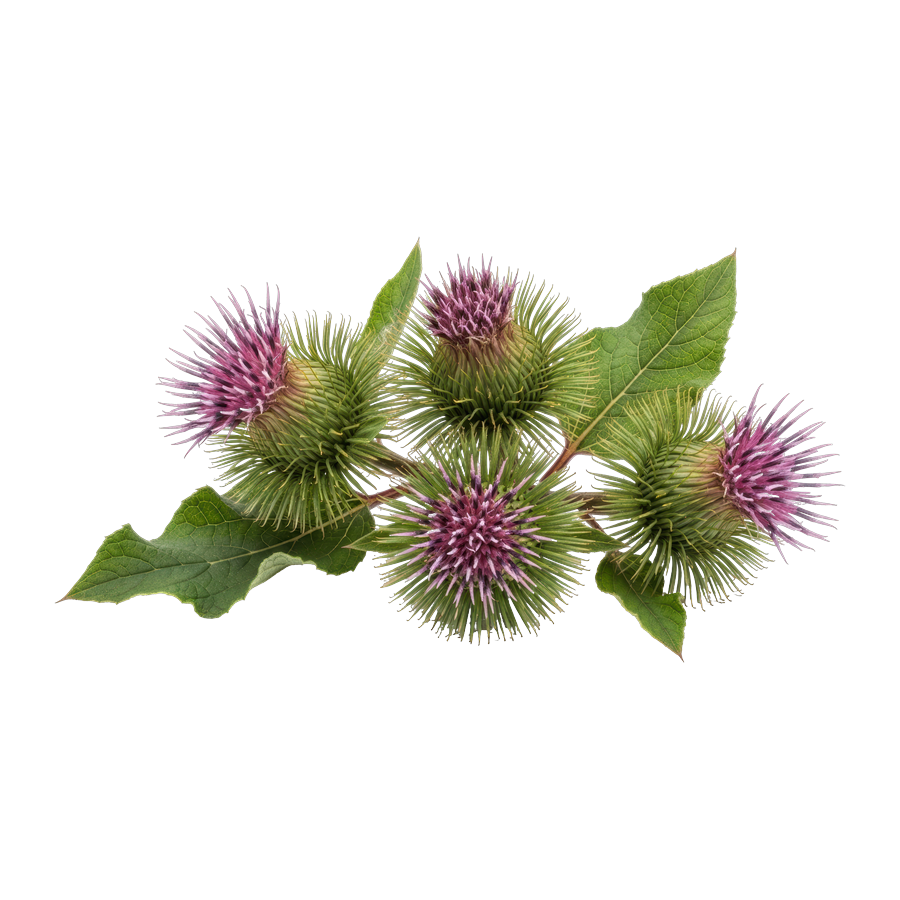
“Purifies the blood and clears the skin.” These numbers are marketing-style talking points, not verified clinical endpoints.
Educational overview
Burdock root appears in Western herbalism as a traditional “alterative” (blood/skin folklore) and in East Asian kitchens as a cooked vegetable (gobo). Education can honor both food use and historical skin-terrain language without promising purification percentages.
Compounds / angles studied
Inulin and other fibers
Polyphenols / lignans of research interest
Traditional alterative and diuretic folklore
Nutritional notes
Approximate kitchen nutrition, not lab assay: cooked root is mostly carbohydrate with notable fiber (including inulin); modest micronutrients depending on portion. Food-first use is common in Japanese and Korean cooking.
Cautions
Asteraceae allergy; possible blood-sugar or diuretic additive effects; avoid confusing wild look-alikes when foraging; pregnancy — ask a clinician before concentrated extracts.
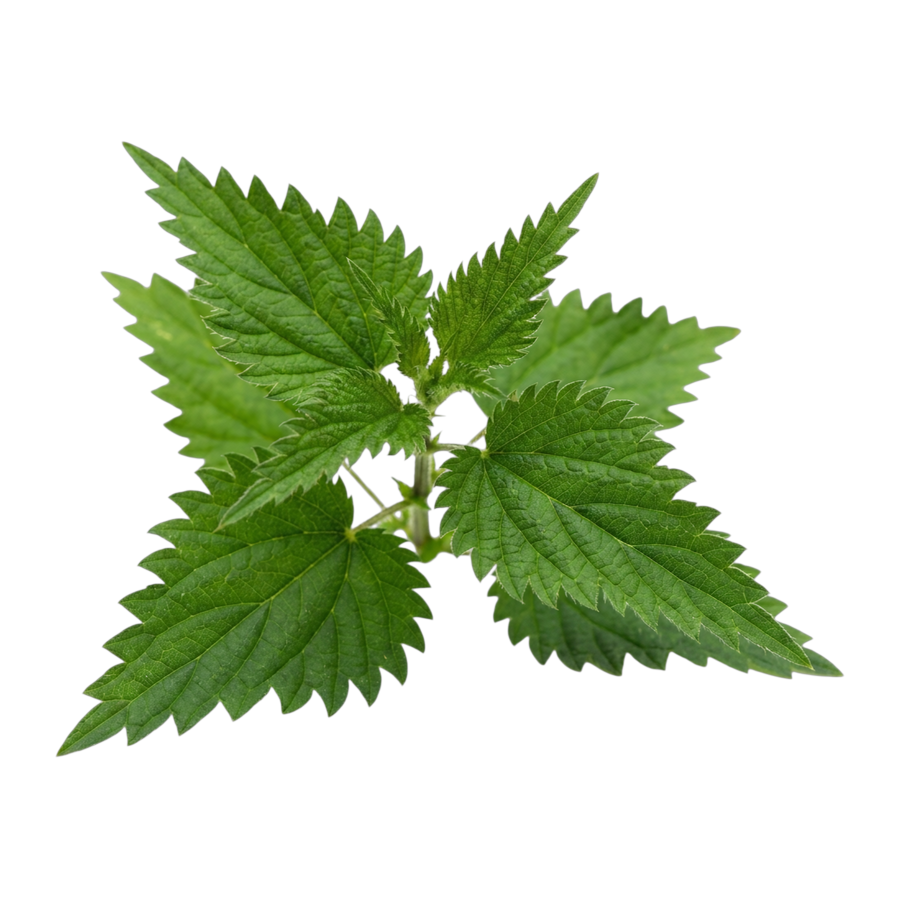
“Cleanses 100 liters of blood” (often tied to chlorophyll). These numbers are marketing-style talking points, not verified clinical endpoints.
Educational overview
Stinging nettle leaf is a classic mineral-rich tea and cooked green in folk diets. Chlorophyll is a plant pigment involved in photosynthesis — it is not a metric for how many liters of human blood get “cleansed.” That line is poetic nonsense dressed as physiology.
Compounds / angles studied
Mineral content (iron, calcium, magnesium — amounts depend on prep)
Flavonoids and phenolic acids
Histamine / allergy-season folklore (leaf vs root have different traditional uses)
Chlorophyll as pigment — not a blood-volume cleansing measure
Nutritional notes
Approximate kitchen nutrition, not lab assay: cooked young leaves or infusions are used for mineral density in traditional diets; macros are modest. Handle fresh plants carefully (stinging hairs); drying or cooking neutralizes the sting.
Cautions
May interact with blood pressure, blood sugar, or diuretic drugs; kidney disease caution; forage ID skills required; root products are a different use-case than leaf tea.
“Removes 50% of gut toxins.” These numbers are marketing-style talking points, not verified clinical endpoints.
Educational overview
Triphala is a classical Ayurvedic three-fruit blend used traditionally for digestion and elimination support. Modern interest includes polyphenols and gentle laxative folklore. There is no verified clinical measure of “50% gut toxins.”
Compounds / angles studied
Tannins, vitamin C–related interest in Amalaki (Emblica officinalis)
Antioxidant and microbiome research angles (early/ongoing)
Nutritional notes
Usually taken as powder or tablets for phytochemical tradition, not as a primary macronutrient food. Quality and species authentication matter in commercial blends.
Cautions
Can loosen stools; not for unexplained abdominal pain, obstruction, or severe dehydration; pregnancy and children — clinician guidance; possible interactions with medications absorbed in the gut.
“Neutralizes 90% of free radicals.” These numbers are marketing-style talking points, not verified clinical endpoints.
Educational overview
Turmeric rhizome is a culinary spice; curcuminoids (including curcumin) are the usual research spotlight for antioxidant and NF-κB / inflammatory-pathway education. Culinary amounts differ sharply from high-dose extracts. “90% free radicals” is not a meaningful clinical endpoint.
Compounds / angles studied
Curcuminoids — antioxidant and signaling research
NF-κB and cytokine pathway education in basic/clinical literature
Absorption folklore: dietary fat and piperine (black pepper) often discussed; formulations vary widely
Nutritional notes
Approximate kitchen nutrition, not lab assay: a teaspoon of ground turmeric is low-calorie with small mineral contributions; curcumin content is a minority of the powder. Golden-milk style recipes are food culture, not medical dosing.
Cautions
High-dose extracts may affect bleeding risk, gallstones, or drug metabolism; GERD worsening in some people; pregnancy high-dose caution; quality and adulteration issues exist in the supplement market.
“Increases detox flow by 40%.” These numbers are marketing-style talking points, not verified clinical endpoints.
Educational overview
Ginger is a warming culinary rhizome with a solid educational footprint for nausea and digestion comfort literature. “Detox flow +40%” is marketing language without a standardized clinical meaning.
Compounds / angles studied
Gingerols and shogaols
Nausea / motion / pregnancy-nausea literature (always clinician-guided in pregnancy)
Gastric motility and warming digestive folklore
Nutritional notes
Approximate kitchen nutrition, not lab assay: fresh or dried ginger contributes flavor and modest micronutrients; macros are small at typical culinary doses. Tea and cooking are the usual food-first gateways.
Cautions
May increase bleeding tendency at higher intakes; heartburn possible; gallstone caution for some; check medication interactions (anticoagulants, diabetes drugs) with a pharmacist.
“Flushes the kidneys.” These numbers are marketing-style talking points, not verified clinical endpoints.
Educational overview
Parsley is a common garnish that is also a concentrated source of vitamin K when eaten in larger herb portions. Traditional diuretic / “kidney flush” talk exceeds what culinary use can claim. Essential-oil constituents (apiol, myristicin) matter more in concentrated extracts than in a sprinkle of leaf.
Compounds / angles studied
Apiol and myristicin (especially in seed/oil — not identical to leaf garnish)
Flavonoids (e.g., apigenin interest)
Mild diuretic folklore — not a medical kidney flush
Nutritional notes
Approximate kitchen nutrition, not lab assay: fresh parsley can be notably high in vitamins K, C, and A (carotenoids) plus folate per cup of chopped herb. Treat it as a nutrient-dense green herb, not a procedure.
Cautions
Vitamin K can interfere with warfarin dosing consistency — keep intake steady and inform your clinician. Concentrated parsley oil/seed is inappropriate in pregnancy. Kidney disease: do not self-prescribe “flushes.”
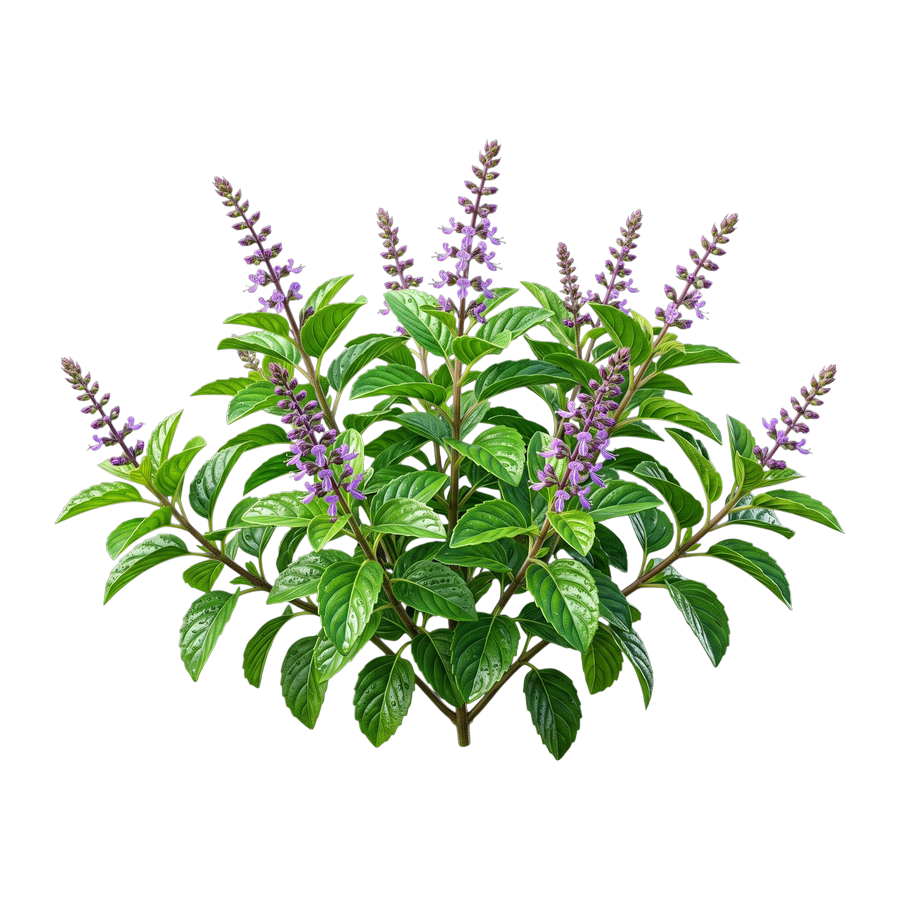
“Boosts detox enzymes by 60%.” These numbers are marketing-style talking points, not verified clinical endpoints.
Educational overview
Tulsi is revered in Ayurvedic tradition as an adaptogen-leaning aromatic herb, often taken as tea. Modern papers explore stress, metabolic, and antioxidant angles. Enzyme “+60%” claims from social graphics are unverified marketing language.
Compounds / angles studied
Eugenol and other essential-oil constituents (chemotypes vary)
Ursolic acid and related triterpenoids of research interest
Adaptogen / stress-response folklore with emerging human data
Nutritional notes
Used primarily for aromatic phytochemicals in tea or tincture form, not as a macronutrient staple. Culinary sweet basil (O. basilicum) is a related but different plant.
Cautions
May affect fertility parameters or blood sugar/pressure in some contexts — evidence still developing; eugenol-rich oils are not for casual high-dose use; pregnancy and medication review with a clinician recommended.
“Binds 8× its weight in metals.” These numbers are marketing-style talking points, not verified clinical endpoints.
Educational overview
Chlorella is a single-celled freshwater green alga sold as tablets or powder. Detox culture markets it as a binder for metals and other compounds. Binder folklore exists in limited research contexts; “8× its weight” is classic unverified marketing math, not a clinical standard.
Compounds / angles studied
Cell-wall fibers and chlorophyll-rich biomass
Metal-binding / excretion research (species, dose, and human relevance vary)
Protein and micronutrient composition of interest in food-tech literature
Nutritional notes
Approximate kitchen nutrition, not lab assay: often marketed for protein and chlorophyll. Labels may list vitamin B12 — many algal B12 analogues are not reliably bioactive for humans; do not count on chlorella alone to correct B12 deficiency. Broken-cell-wall products are common marketing claims; quality varies.
Cautions
GI upset, green stools; immune-modulation theoretical issues; contamination risk if poorly sourced (heavy metals in algae products is an irony worth quality testing); medication timing if using as a binder — ask a clinician. Not a substitute for medical chelation.
Food first. Prefer culinary garlic, cilantro, parsley, turmeric, ginger, and cooked burdock or nettle greens when they fit your kitchen — before jumping to megadose extracts.
One plant at a time. If you add a tea or supplement, introduce singly so you can notice tolerance.
Medications, pregnancy, breastfeeding, or liver/kidney disease. Talk with a qualified clinician or pharmacist before concentrated herbs or algae products.
Detox basics beat slogan cleanses. Sleep, adequate protein, fiber, hydration, sweat from sensible movement, and bile/bowel regularity support the organs that already do the work.
Read claims critically. If a graphic gives a precise percentage with no study, treat it as marketing — then follow the PubMed / NIH links above.
Education only. Journey2Health does not sell cleanses and does not claim these plants cure, treat, or prevent disease.