Read this first. This page is orthomolecular literacy — chemistry, physiology, historical clinical perspectives, and safety context. It is not medical advice, not a protocol to replace emergency care, and not a claim that vitamin C cures disease. High-dose oral or intravenous ascorbate belongs in conversation with a qualified clinician, especially if you take medications, have kidney disease, G6PD deficiency, iron overload, or are pregnant.
What ascorbate is chemically
Vitamin C is L-ascorbic acid (and its conjugate base, ascorbate). Chemically it is a small, water-soluble carbohydrate-like molecule (formula C6H8O6) that can donate electrons — one or two per molecule — and then be recycled back toward its reduced form by other redox partners in the body.
In food and supplements you will see “ascorbic acid,” “sodium ascorbate,” “calcium ascorbate,” and related mineral salts. Orthomolecular educators (including Andrew Saul) emphasize that ascorbic acid is vitamin C — not a lesser synthetic imitation of some separate “food vitamin C.” Flavonoids and other plant co-factors can be nutritionally interesting on their own, but they are not required to define the anti-scorbutic molecule itself. See OMNS discussions such as Ascorbic Acid Vitamin C: What’s the Real Story? and Forms, Doses, and Effects of Vitamins C and E.
Ascorbic acid is a weak acid (roughly vinegar-strength conceptually, far weaker than stomach hydrochloric acid). Stomach discomfort at high oral intakes is real for some people; it is usually managed educationally by food timing, liquids, or buffered ascorbate salts — not by treating vitamin C as uniquely “dangerous acid.” See Vitamin C and Acidity (OMNS).
Why humans need an external source
Most mammals synthesize ascorbate from glucose in the liver. Humans (and a few other species, including guinea pigs and some primates) lack a functional final enzyme in that pathway — L-gulonolactone oxidase (GULO). Without it, the conversion of glucose → ascorbate stops short, so vitamin C must come from diet or supplements.
Orthomolecular writers often frame this as an inherited metabolic gap (Irwin Stone’s “hypoascorbemia” language; Fred Klenner’s clinical essays). Comparative estimates sometimes cited in that literature suggest that if humans still made ascorbate endogenously, unstressed daily production might land in the low-gram range, with substantially higher output under physiologic stress — figures used as conceptual context, not as a personal prescription. See Klenner’s archived essay: Observations on the Dose and Administration of Ascorbic Acid… (JOM reprint).
Mainstream nutrition sets RDAs in the tens-to-low-hundreds of milligrams to prevent scurvy and support ordinary dietary adequacy (NIH ODS). Orthomolecular literacy studies both worlds: scurvy-prevention minima and historical high-intake clinical perspectives — carefully labeled as education.
Vitamin C is water-soluble. It is absorbed in the intestine (saturable transporters matter at higher intakes), circulates in plasma, and concentrates into tissues via cellular transporters. Leukocytes, the adrenal glands, the pituitary, the eye, and the brain can hold substantially higher ascorbate than plasma — a physiologic clue that certain compartments “prefer” a richer local pool.
Low-to-moderate intakes: absorption efficiency is relatively high; plasma levels rise, then renal handling and tissue uptake shape the curve.
Higher divided oral intakes: fractional absorption falls; more remains in the gut lumen — which is part of why bowel tolerance appears as GI saturation signaling in Cathcart’s educational model.
Half-life notions: at ordinary dietary intakes, plasma ascorbate turns over on the order of hours to a day-ish scale in textbook summaries; at very high intakes, excess is cleared more rapidly and urinary ascorbate rises. Exact numbers vary with dose, prior status, illness, and assay method — treat “half-life” as a concept, not a stopwatch for self-dosing.
Tissue vs plasma: feeling “done” with a blood value does not always equal tissue repletion timelines, especially after illness or surgery when utilization can surge.
Ascorbate is not only an antioxidant buzzword. It is a required cofactor or facilitator in several enzyme systems:
Collagen hydroxylation — enzymes that stabilize collagen (and related connective proteins) depend on ascorbate. Classic scurvy is, in part, a connective-tissue failure story: gums, vessel walls, wound repair.
Carnitine synthesis — helping move fatty acids into mitochondria for oxidation; low ascorbate can theoretically constrain this pathway.
Neurotransmitter and catecholamine chemistry — including dopamine β-hydroxylase steps toward norepinephrine; adrenal medulla is ascorbate-rich for a reason.
Peptide hormone amidation — amidating monooxygenase pathways that mature certain peptide hormones.
Tyrosine metabolism and other hydroxylases — broader family of iron-dependent dioxygenases where ascorbate helps keep the catalytic iron in a usable state.
Educational takeaway: vitamin C literacy is partly structural biochemistry (skin, vessels, scars) and partly metabolic biochemistry (energy shuttle and messenger chemistry) — not only “immune booster” marketing language.
Antioxidant recycling: vitamin E, glutathione, and redox framing
In aqueous compartments, ascorbate can quench reactive oxygen species and then be regenerated by enzymatic and non-enzymatic partners. In membranes, vitamin E (tocopherols) can be oxidized while protecting lipids; ascorbate can help re-reduce oxidized vitamin E at the membrane–water interface — an educational “relay” often taught in redox nutrition.
Glutathione systems intersect the same neighborhood: thiol antioxidants and ascorbate frequently appear together in discussions of cellular redox buffering. Thomas Levy’s orthomolecular writing goes further, framing much of illness as excess oxidative stress and positioning ascorbate as a primary electron-donor tool in that model — including the nuance that ascorbate can behave as antioxidant or, in certain microenvironments with transition metals, as a pro-oxidant. That dual framing is Levy’s educational thesis, not a universal clinical order. See his OMNS commentary The Clinical Impact of Vitamin C and public lectures/summaries such as those archived via Riordan Clinic materials on vitamin C, mitochondria, and cellular energy.
Calm synthesis for learners: ascorbate participates in a network. Stacking “more antioxidants” without context is not the same as understanding kinetics, forms, iron status, and clinical caution.
Immune cells can concentrate ascorbate well above plasma levels. Educational literature discusses roles in epithelial barrier support, leukocyte function, phagocyte oxidative burst chemistry, and modulation of inflammatory signaling. Deficiency clearly impairs host defense; whether supplemental megadoses change outcomes in already-replete people is a separate, contested research question.
Word carefully: ascorbate is involved in normal immune cell redox economy. That is not identical to “vitamin C cures infections.” Orthomolecular clinicians (Klenner, Cathcart, Levy, Saul-era education) have long argued for vigorous ascorbate support during infectious stress; mainstream evidence summaries are more cautious and dose-/setting-specific. Hold both statements without collapsing them into certainty claims.
See also NIH ODS notes on vitamin C and immune function within broader supplement immune fact sheets, and OMNS educational pieces such as Vitamin C Questions: Answered.
Endothelium & iron absorption adjunct context
Vessel / endothelial angle: ascorbate supports collagen in vessel walls and participates in nitric-oxide–related redox conversations in vascular research. Educational interest in endothelial tone and capillary integrity goes back to scurvy pathology and continues in modern vascular biology — again as literacy, not a self-treatment plan for cardiovascular disease.
Iron absorption: ascorbic acid can enhance non-heme iron absorption from plant foods by reducing ferric iron and forming absorbable complexes. That is useful kitchen knowledge for iron-poor diets — and a caution flag in hemochromatosis or iron overload, where extra vitamin C with iron-rich meals may be undesirable without clinician guidance (NIH ODS safety notes).
Adrenal tissue is rich in ascorbate; physiologic stress (infection, trauma, surgery, smoking, environmental exposures) is repeatedly described in both mainstream and orthomolecular sources as increasing ascorbate utilization or lowering status.
Orthomolecular framing (labeled as such):
Klenner — mid-20th-century clinician essays on large oral and intravenous ascorbate across infections, toxins, and surgical stress (historical clinical perspective; not modern guideline care).
Cathcart — bowel-tolerance titration model: oral tolerance often rises when people are ill, interpreted as increased systemic demand for reducing equivalents.
Levy — toxin/oxidative-stress model: ascorbate as a broad electron donor against infection- and toxin-associated oxidation; IV emphasized when oral delivery cannot match demand.
Saul / DoctorYourself & OMNS — public education translating those clinical traditions into lay literacy, always best paired with clinician judgment for personal use.
None of the above replaces emergency medicine, antimicrobials when indicated, or hospital care. Education can study historical dosing concepts without treating them as DIY orders.
Oral vs intravenous distinctions (education only)
Oral ascorbate is limited by intestinal absorption and by GI tolerance. Divided doses across the day are a common educational pattern because transporters saturate and plasma peaks are transient.
Intravenous ascorbate bypasses the gut, allowing much higher plasma concentrations than oral dosing can achieve. That pharmacokinetic difference is why IV appears in clinical orthomolecular and integrative hospital research contexts. IV vitamin C is a clinical procedure — sterile compounding, osmolarity, rate, labs, and screening (including G6PD in many protocols) belong to licensed settings. This site does not teach you to administer IV ascorbate.
Historical and educational reading: Riordan et al. on clinical/experimental IV vitamin C in the Journal of Orthomolecular Medicine archive — Clinical and Experimental Experiences with Intravenous Vitamin C — and Levy’s OMNS clinical commentary linked above.
Forms: ascorbic acid, mineral ascorbates, liposomal — tradeoffs
Ascorbic acid — the classic researched oral form; inexpensive; acidic taste/feel; some people prefer it with food or juice.
Sodium, calcium, magnesium, potassium ascorbate — buffered salts; often gentler on the stomach; mineral load matters (e.g., sodium in sodium ascorbate at very high gram intakes).
Liposomal vitamin C — phospholipid vesicles intended to alter delivery kinetics; popular in integrative circles; still not identical to IV plasma peaks; quality and claims vary by brand.
Time-release — may smooth GI exposure; still oral pharmacokinetics.
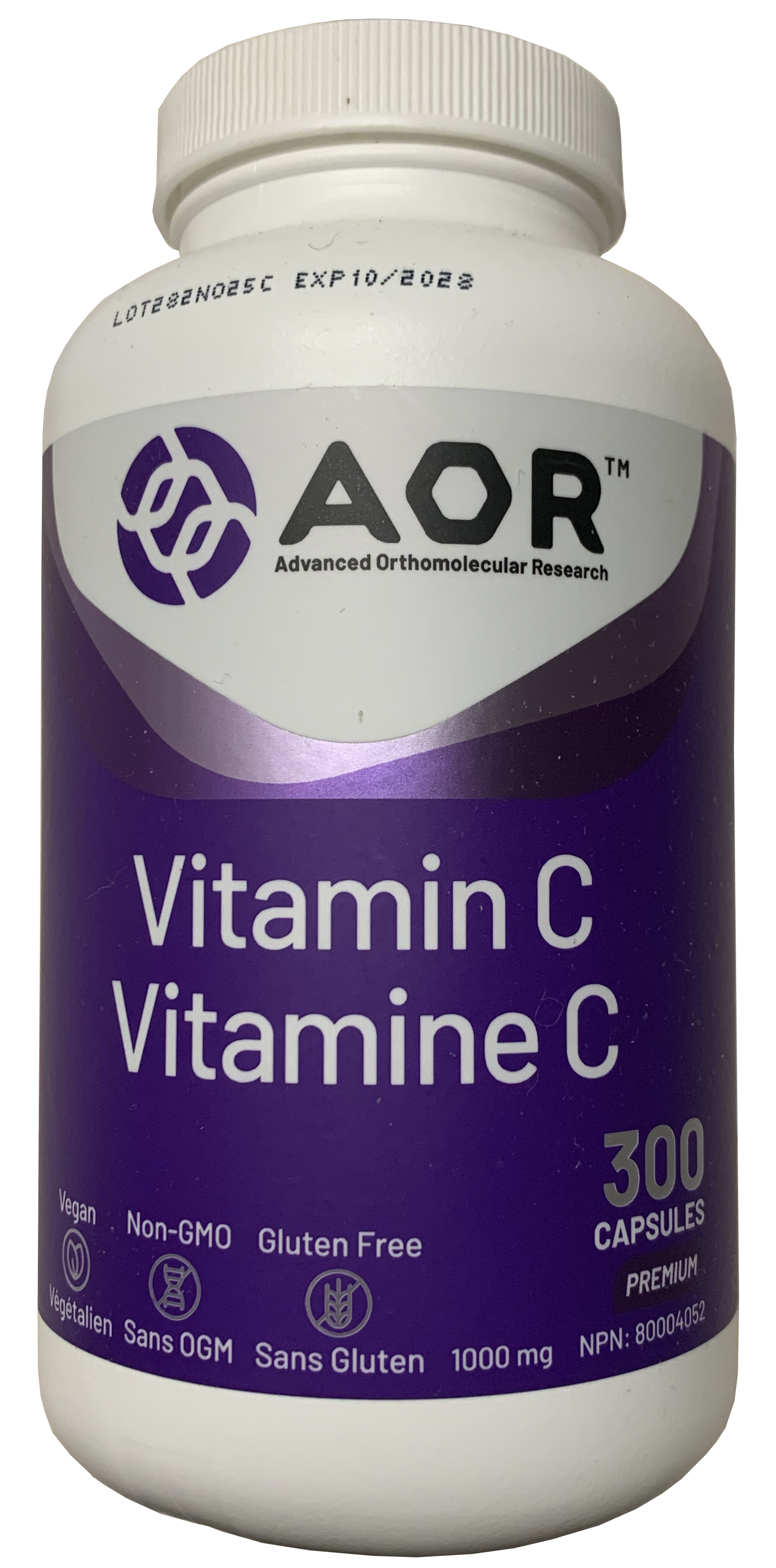
Shelf example on this site: AOR Vitamin C — an official product link is provided as a concrete bottle example, not a sales pitch or “best brand” verdict. Choose forms with a clinician if you have kidney, electrolyte, or acid-sensitivity concerns.
Bowel tolerance — historical / educational orthomolecular practice note
Robert Cathcart popularized titrating oral ascorbic acid to bowel tolerance: divided oral doses increased until gas or loose stool appears, then backing off slightly. He reported that tolerance often rose during infection or stress, and he used that rise as a rough saturation signal. DoctorYourself and OMNS articles preserve this as public education history.
Educational label — not a prescription
Bowel tolerance is a historical clinical heuristic from orthomolecular practice. It is not a mandate, not appropriate for everyone, and not a substitute for diagnosis. People with GI disease, ostomies, electrolyte issues, or who cannot interpret stool changes safely should not experiment with aggressive titration. Children, pregnancy, and complex medication regimens need clinician guidance — not internet dosing contests.
Excellent food sources include bell peppers, citrus, kiwi, strawberries and other berries, broccoli, Brussels sprouts, parsley, rose hips, and acerola. Freshness and preparation matter; vitamin C is heat- and oxygen-sensitive.
Household figures below are scaled from USDA SR28 (same underlying USDA dataset historically shown on nutritiondata.self.com). nutritiondata.self.com was unreachable at edit time (DNS/server failure); NDB numbers are cited so values can be re-checked on nutritiondata.self.com when available, or via USDA FoodData Central.
Red sweet pepper, raw — 1 medium (~119 g) (SR28 NDB 11821): vitamin C ~152 mg; vitamin A RAE ~187 µg; vitamin B-6 ~0.35 mg; potassium ~251 mg.
Orange, raw — 1 fruit 2-5/8" dia (~131 g) (NDB 09200): vitamin C ~70 mg; folate ~39 µg; calcium ~52 mg; potassium ~237 mg.
Kiwifruit, green — 1 fruit 2" dia (~69 g) (NDB 09148): vitamin C ~64 mg; potassium ~215 mg; folate ~17 µg (scaled from per-100 g / fruit weight).
Broccoli, raw — 1 cup chopped (~91 g) (NDB 11090): vitamin C ~81 mg; folate ~57 µg; potassium ~288 mg.
Strawberries, raw — 1 cup halves (~152 g) (NDB 09316): vitamin C ~89 mg; folate ~36 µg; potassium ~233 mg.
Food-first nutrition covers ordinary adequacy for many people. Orthomolecular megadose discussions (grams per day, bowel-tolerance titration, IV) live in a different educational lane than “eat your peppers.” Both lanes matter: food literacy for daily life; clinical ascorbate literacy for understanding why historical physicians used far larger amounts under stress — without confusing grocery produce with hospital IV bags.
Safety: oxalate / kidney stones, G6PD, iron overload, interactions
GI effects: nausea, cramping, diarrhea at high oral intakes — usually dose-related and reversible by lowering intake (the practical signal behind bowel tolerance).
Oxalate / kidney stone debates: ascorbate can increase urinary oxalate in some people; history of calcium-oxalate stones warrants clinician oversight and hydration wisdom. Orthomolecular essays (including Klenner) have argued the risk is often overstated relative to benefits they observed — treat that as historical opinion, and still take personal stone history seriously.
G6PD deficiency: high-dose IV ascorbate has hemolysis risk reports in G6PD deficiency; screening is part of many clinical IV protocols.
Iron overload / hemochromatosis: extra vitamin C may worsen iron accumulation — caution above RDA ranges unless a clinician agrees.
Drug / lab interactions (high-level): high-dose ascorbate can interfere with some point-of-care glucose meters; discuss chemotherapy, anticoagulants, and other regimens with the prescribing team rather than adding megadoses silently.
Upper limits: NIH FNB adult UL of 2,000 mg/day applies to general supplemental use in healthy people and does not describe supervised clinical ascorbate therapy.
Never stop prescribed medications because of something you read here. Never use oral vitamin C as a reason to delay emergency care.
PubMed and orthomolecular links are starting points for self-education. Always read primary papers in full context and consult professionals for personal decisions. Historical clinical success stories are not the same as modern controlled-trial proof for every claim.