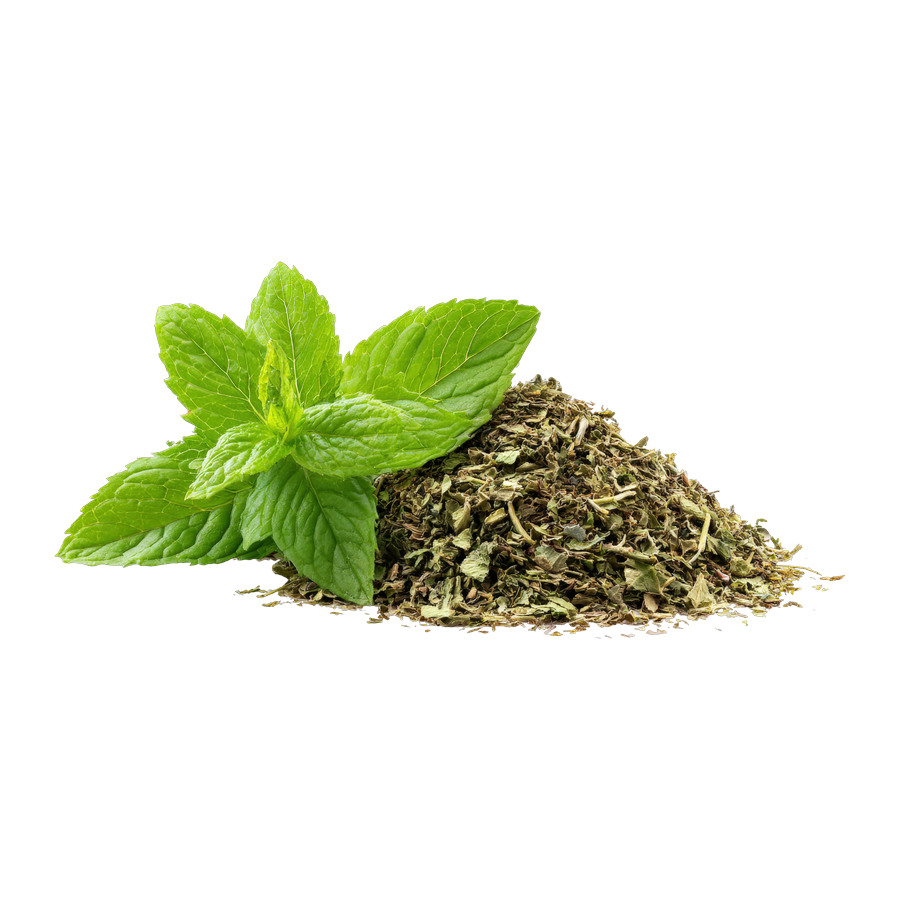
Hybrid identity & menthol
Peppermint is a sterile hybrid of spearmint and watermint, propagated by rhizomes. Its signature cool comes largely from menthol (and related monoterpenes), which engage cold-sensing pathways (TRPM8 educational framing) — why peppermint “feels cold” without lowering core temperature. Spearmint (mint) is typically carvone-forward and milder.
Orthomolecular / nutritional uses in the body
- Menthol cooling literacy — Educational sensory pharmacology: cooling sensation ≠ antipyretic drug. Useful for understanding why peppermint tea feels “fresh.”
- Aromatic digestive folklore — Traditional after-meal and travel teas. Orthomolecular educators may list peppermint tea beside hydration and magnesium comfort conversations as kitchen support — not as a substitute for evaluation of abdominal pain.
- Redox / polyphenol context — Fresh Mentha leaf contributes minor vitamin C and plant phenolics at food scale; Levy-style ascorbate depth remains the primary electron-donor teaching on this site (vitamin C) — peppermint is an aromatic ally, not the foundation.
- Pairing with bitters — Mint cool often balances bitter teas such as dandelion leaf — culinary, not clinical.
Thomas Levy’s broader oxidative-stress educational model situates culinary polyphenols and aromatic spices as supportive redox-context foods beside foundational ascorbate/mineral literacy — not as standalone cures. See OMNS commentaries and Levy lectures archived via orthomolecular channels for that framing.
Conditions discussed in nutritional literature (education only)
IBS / enteric oil: Clinical literature discusses enteric-coated peppermint oil for IBS symptom research — that is product-specific evidence mapping, not a claim that peppermint tea treats IBS, and not permission to self-dose oil. GERD / heartburn: mint can worsen reflux for some. Nausea / comfort teas: traditional beverage use; evidence strength varies and differs from ginger’s better-studied nausea literature.
No cure claims
Condition names appear only to map how Levy / OMNS / DoctorYourself / traditional sources discuss kitchen spices. Presence on this page is not a diagnosis tool and not evidence that peppermint treats disease.
Quantified nutrients (USDA)
Household figures below are scaled from USDA SR28 (same underlying USDA dataset historically shown on nutritiondata.self.com). NDB numbers are cited so values can be re-checked on nutritiondata.self.com when available, or via USDA FoodData Central.
- Peppermint, fresh — 2 tbsp (~3.2 g) (NDB 02064): vitamin C ~1.0 mg; calcium ~7.8 mg; iron ~0.16 mg; magnesium ~2.6 mg; potassium ~18 mg; vitamin A RAE ~6.8 µg (scaled from per-100 g).
- Peppermint, fresh — per 100 g (NDB 02064): energy ~70 kcal; protein ~3.8 g; fiber ~8.0 g; calcium ~243 mg; iron ~5.1 mg; magnesium ~80 mg; potassium ~569 mg; vitamin C ~31.8 mg; vitamin A RAE ~212 µg; folate ~114 µg — verify on FDC.
- Dried tea bags — composition varies widely by brand and cut; use FDC / label when quantifying, or treat as aromatic beverage first.
Spices are used in gram-scale pinches; per-teaspoon density can still be educationally surprising for minerals like iron or manganese.
Kitchen tea & culinary notes
Simple peppermint leaf tea
5–8 fresh leaves (or 1 tsp dried peppermint leaf) in hot water 5–10 minutes. Optional honey after cooling slightly. If you have reflux, test cautiously or prefer non-mint digestives.
Iced peppermint
Brew double-strength, cool, pour over ice — summer hydration folklore with flavor, not a medical protocol.
Chocolate / dessert pinch
Tiny dried peppermint leaf in cocoa or dark chocolate desserts — confection tradition; keep doses culinary.
Historical & commercial uses
European cultivated hybrid with major commercial menthol-mint acreage historically in the US Midwest and Pacific Northwest for oil and flavoring. Global tea, toothpaste, and confection industries made peppermint one of the most recognized Mentha flavors. Older European herbals discuss mint broadly; modern peppermint oil industry is a later specialization.
References & further learning
PubMed and agency links are starting points; always read primary papers and consult professionals for personal decisions.