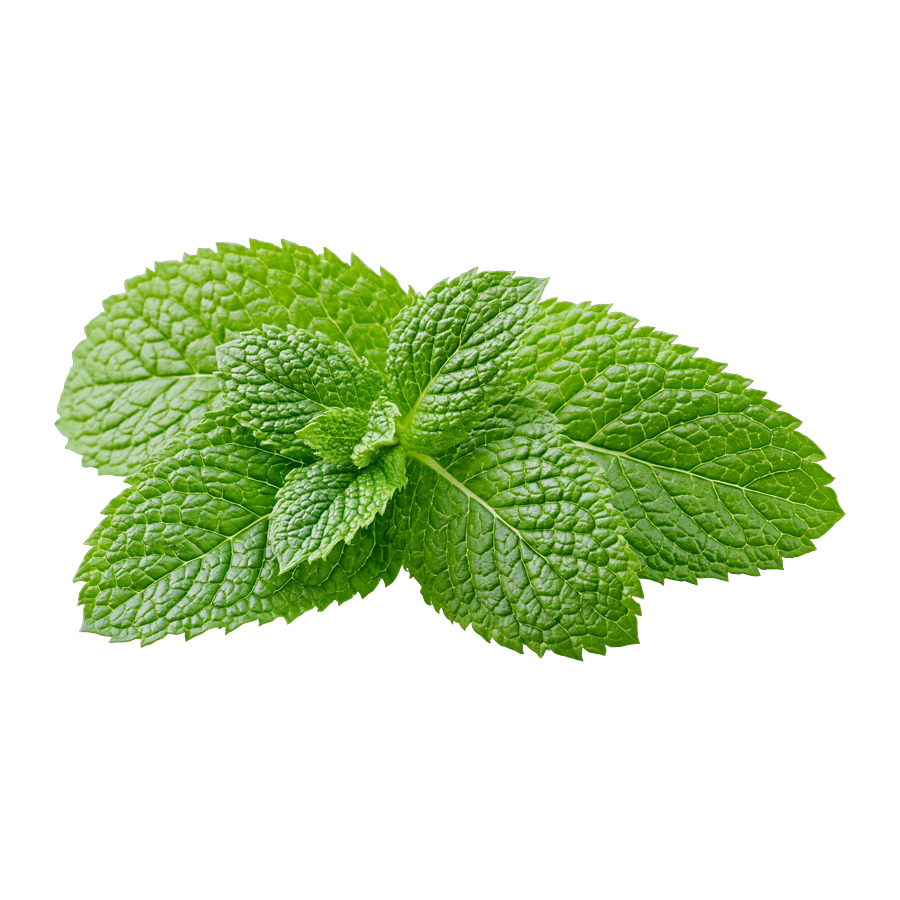
Species & kitchen identity
“Mint” on a spice jar is usually spearmint (Mentha spicata) or a dried Mentha blend — milder, sweeter, carvone-forward — not the sharp menthol blast of peppermint. Fresh garden mint may be spearmint, apple mint, or local hybrids; dried commercial “mint” for Mediterranean and Middle Eastern cooking is typically spearmint-style leaf.
- Spearmint / dried mint — this page; savory + tea
- Peppermint — see peppermint; tea vs enteric oil distinction
- Essential oils — concentrated; not culinary pinches; different safety class
Orthomolecular / nutritional uses in the body
- Aromatic terpenes (carvone-leaning in spearmint) — Mentha chemistry varies by species. Spearmint’s carvone-rich profile explains the sweeter “chewing-gum green” aroma versus peppermint’s menthol cool. Orthomolecular kitchens treat these aromatics as sensory/digestive allies beside foundational ascorbate (vitamin C) and mineral literacy — not as electron-donor “drugs.”
- After-meal tea folklore — Cross-cultural mint tea after heavy meals is kitchen practice. Levy / OMNS-style education situates aromatic teas inside hydration, magnesium comfort, and redox-terrain conversations as supportive habits — labeled education, not IBS or GERD therapy.
- Dried leaf as mineral-dense pinch food — USDA dried spearmint tables show striking iron, calcium, and magnesium per gram; a teaspoon is still a small absolute dose, but the density teaches why dried herbs can surprise in micronutrient literacy.
- Pairing with bitters — Culinary tradition often softens bitter greens/teas (including dandelion) with mint coolness — harmony of palate, not a medical formula.
Thomas Levy’s broader oxidative-stress educational model situates culinary polyphenols and aromatic spices as supportive redox-context foods beside foundational ascorbate/mineral literacy — not as standalone cures. See OMNS commentaries and Levy lectures archived via orthomolecular channels for that framing.
Conditions discussed in nutritional literature (education only)
Traditional and nutritional conversations place mint near digestive comfort, “cooling” humoral language, and after-meal tea culture. Enteric-coated peppermint oil IBS research is a different product — see the peppermint page. Mint leaf can relax the lower esophageal sphincter in some people and worsen reflux; that is a caution, not a cure conversation.
No cure claims
Condition names appear only to map how Levy / OMNS / DoctorYourself / traditional sources discuss kitchen spices. Presence on this page is not a diagnosis tool and not evidence that mint treats disease.
Quantified nutrients (USDA)
Household figures below are scaled from USDA SR28 (same underlying USDA dataset historically shown on nutritiondata.self.com). NDB numbers are cited so values can be re-checked on nutritiondata.self.com when available, or via USDA FoodData Central.
- Spearmint, dried — 1 tsp (~0.5 g) (NDB 02065): calcium ~7.4 mg; iron ~0.44 mg; magnesium ~3.0 mg; potassium ~9.6 mg; vitamin A RAE ~2 µg (scaled from per-100 g SR28). Absolute amounts are small; density per gram is the teaching point.
- Spearmint, dried — per 100 g (NDB 02065): energy ~285 kcal; protein ~19.9 g; fiber ~29.8 g; calcium ~1488 mg; iron ~87.5 mg; magnesium ~602 mg; potassium ~1924 mg; vitamin A RAE ~405 µg — verify on FDC for the lot you buy (dried leaf packs vary).
- Spearmint, fresh — 2 tbsp chopped (~3–4 g) (related fresh Mentha entries on FDC): vitamin C and water-soluble volatiles higher than dried; dried jars concentrate minerals by water loss.
Spices are used in gram-scale pinches; per-teaspoon density can still be educationally surprising for minerals like iron or manganese.
Kitchen uses & simple recipes (culinary education)
Classic dried-mint tea
1 tsp dried mint (or a small handful fresh) in ~240 ml near-boiling water, steep 5–8 minutes, strain. Optional: lemon wedge. Not a drug dose — a beverage.
Yogurt–mint sauce (labneh / kebab style)
Stir ½–1 tsp dried mint (crushed between fingers) into plain yogurt with minced garlic, lemon, salt, and olive oil. Rest 10 minutes so dried leaf rehydrates.
Herb rub
Combine dried mint with oregano, garlic powder, and black pepper for lamb or roasted vegetables — Mediterranean pantry logic.
Bitter-green softener
A mint sprig or pinch of dried mint in dandelion leaf tea is traditional kitchen pairing for some palates.
Historical & cross-cultural traditional uses
Mentha species are Eurasian natives with deep Greek, Roman, Persian, and later Ottoman culinary footprints — strewing herbs, sauces, and teas. Dried mint became a Levantine and North African pantry staple because leaf keeps well when properly dried. Spearmint cultivation spread with European gardens into North America for tea, jelly, and confection flavoring. Humoral “cooling” language in older texts is historical framing, not modern clinical classification.
References & further learning
PubMed and agency links are starting points; always read primary papers and consult professionals for personal decisions.