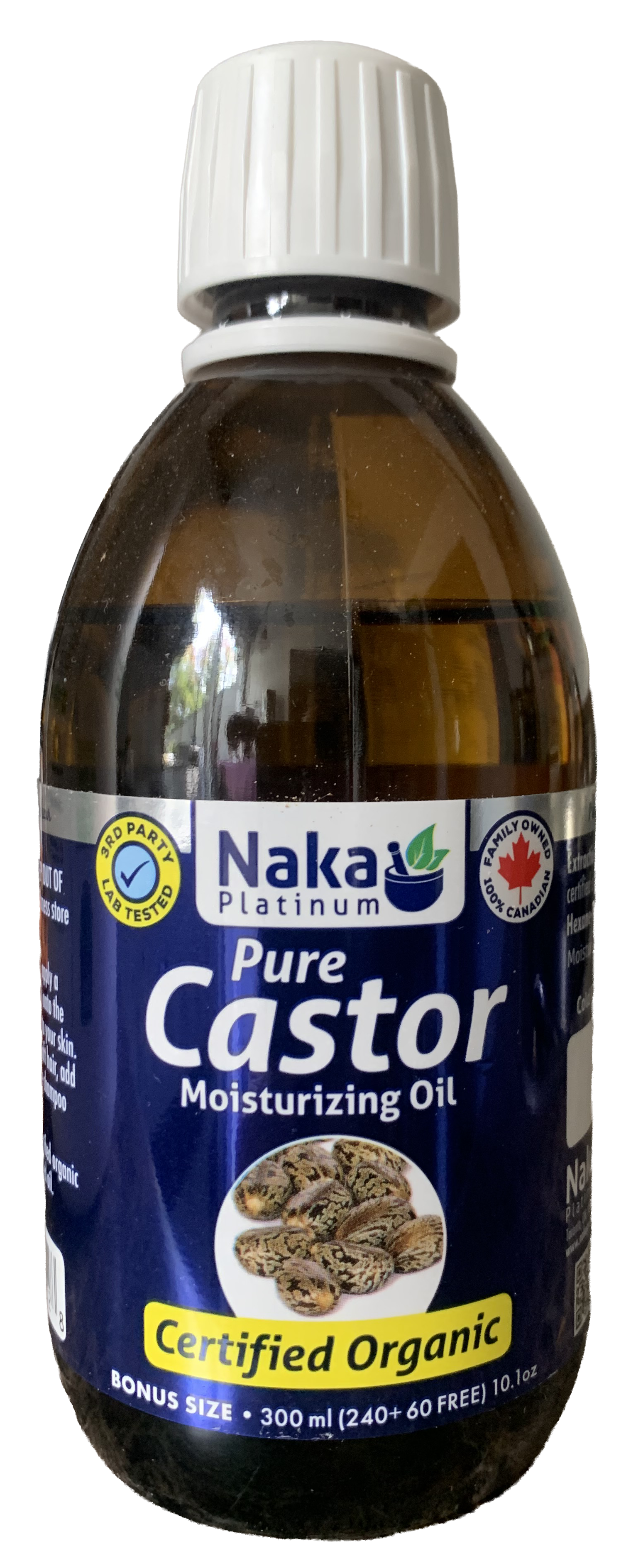
Read this first. This page is botanical and clinical literacy — chemistry, physiology, research summaries, tradition, and safety context. It is not medical advice, not a constipation protocol, not a labor starter, and not a claim that castor oil detoxes organs or treats disease. The Naka bottle shown is an external moisturizer; oral stimulant-laxative literacy lives in separate sections and must not be read as “drink this bottle.” Pregnancy, acute abdomen, bowel obstruction, severe dehydration, children, and castor allergy need a clinician before any oral use — and often before abdominal packs.
What castor oil is
Evidence tag: LITERACY. Castor oil is the triglyceride oil pressed from seeds of the castor plant (Ricinus communis). Its signature fatty acid is ricinoleic acid (12-hydroxyoleic acid), typically about 85–90% of the fatty-acid profile — unusual among common culinary oils. The finished oil is viscous and pale yellow; it is a lipid, not a vitamin or mineral.
Educational takeaway: “castor oil” names a seed oil with a distinctive hydroxy fatty acid. Traditional pharmacy used it as a stimulant laxative; modern cosmetic and naturopathic shelves mostly advertise topical moisturizing and pack rituals. Those are different use-contexts — keep them separate when you read labels.
Evidence tag: STRONG (mechanism). After oral dosing, intestinal lipases free ricinoleic acid from the triglycerides. Free ricinoleic acid activates EP3 prostanoid receptors on intestinal smooth muscle, which drives propulsive motility and the classic stimulant-laxative effect. The same receptor family is expressed on uterine smooth muscle — the molecular reason pregnancy caution is not folklore alone (PMID 22615395, Tunaru et al., PNAS 2012).
Local GI action — Mechanism literacy centers on gut motility via EP3, not on “flushing toxins from the liver.”
Uterine adjacency — Same pathway can contract uterus; see pregnancy section below.
Not a tonic — Stimulant laxation is a pharmacologic-style effect with cramping, urgency, and fluid/electrolyte loss risk when misused.
Ricin vs castor oil (must-read safety literacy)
Evidence tag: SAFETY. Whole castor beans contain ricin, a dangerous protein toxin. Commercial castor oil is not the same substance. Extraction and refining remove the water-soluble ricin fraction; USP / highly refined oils are typically described as having undetectable ricin protein. Cold-pressed oils may retain trace residual protein/allergen in industrial literature — literacy, not a claim that kitchen oil equals bean poisoning.
Never eat castor beans
Bean ingestion and ricin exposure are toxicology emergencies. Castor oil on a moisturizer label is not an antidote framing, not proof the bottle is food-grade for drinking, and not permission to ignore “external use only” warnings on cosmetic bottles.
Opposite myth also drops: fearmongering that every bottle of castor oil contains lethal ricin doses. Beans ≠ oil. Read the label you actually hold.
Oral use for occasional constipation (literacy, not first-line)
Evidence tag: MODERATE + SAFETY. Castor oil has a long history as an oral stimulant laxative. FDA OTC stimulant-laxative category language and clinical summaries (StatPearls NBK551626; CIR cosmetic safety context PMID 18080873) place it among occasional-constipation tools — not as the preferred first-line versus fiber, fluids, and osmotic agents in modern guideline culture.
Expected trade-offs: cramping, urgency, diarrhea, and fluid/electrolyte loss with excess. Chronic “cleansing” drinks are not education-approved here.
Shelf bottle ≠ oral dose
The Naka Platinum product photographed for this page is labeled FOR EXTERNAL USE ONLY. Oral constipation literacy on this page describes a historic pharmaceutical category — it does not instruct you to swallow the moisturizer bottle.
Pregnancy, labor & uterus — strong caution
Evidence tag: SAFETY / MIXED. Because ricinoleic acid can stimulate EP3 on uterine muscle (PMID 22615395), oral castor oil has a folk reputation as a “natural labor starter.” Evidence does not support home DIY induction.
A Cochrane review found insufficient evidence that castor oil induction improves outcomes; nausea is common (PMID 23881775). Newer meta-analyses report some signals around cervical ripening / vaginal delivery timing, but safety data remain incomplete (PMID 36275342; PMID 35837141).
Page stance
Do not use oral castor oil in pregnancy unless a clinician directs it in a supervised setting. Avoid abdominal castor packs in pregnancy without professional advice. “Natural” is not the same as “safe for home labor.”
External traditional uses — skin & hair
Evidence tag: TRADITIONAL + WEAK clinical for hair-growth claims. Topically, castor oil is a common moisturizer and hair/skin conditioner in folk and cosmetic practice. The Cosmetic Ingredient Review assessed castor oil as safe in cosmetics when used as directed (PMID 18080873).
Hair: a 2022 systematic review of hair oils found only weak evidence for castor oil on luster/appearance — not strong evidence for hair growth, baldness reversal, or lice treatment (PMID 35816075). Drop marketing lines that castor oil “grows hair” or “cures baldness.”
Practical literacy: thick oil can coat strands and skin; patch-test; wash hands; keep out of eyes unless using a product designed for ocular use (see eyes section).
Evidence tag: TRADITIONAL / EMERGING-weak. Abdominal castor oil packs are a long-standing folk and naturopathic comfort practice popularized in Edgar Cayce readings and later naturopathic teaching. A pack typically means oil on cloth over the abdomen (sometimes with gentle warmth), for a timed session — framed here as tradition and comfort literacy, not organ “detox.”
What one small clinical trial actually showed. In elderly nursing-home residents, castor oil packs improved some symptoms of constipation — stool consistency, straining, and the feel of evacuation — but did not increase bowel-movement frequency or stool amount (PMID 21168117). That is a narrow, useful honesty check against “pack cures constipation” slogans.
Transdermal absorption literature often cited in Cayce circles (Mein et al. metabolite work) is traditional/naturopathic literature; it was not indexed on PubMed in our 2026-10-05 pass. Educational framing: little systemic exposure compared with oral dosing is the usual teaching point — still not proof of liver or lymph “detox.”
Pack literacy (not a prescription)
Materials — Clean cotton or flannel cloth; castor oil suitable for topical use; optional outer wrap; optional low, supervised heat source (never burn skin; never use damaged heating pads).
Placement — Traditionally over the abdomen; avoid broken skin, fresh wounds, or unexplained acute pain areas.
Duration / rhythm — Folk protocols vary (often tens of minutes). This site does not prescribe minutes, days-per-week, or “courses.” Comfort and skin tolerance matter more than ritual intensity.
Hygiene & stains — Castor oil stains fabric and bedding; wash hands; discard or launder cloths; do not share oily cloths between people.
Heat caution — Warmth is optional tradition, not mandatory. Burns, neuropathy, and impaired sensation are clinician / stop-immediately territory.
Pregnancy — Skip unsupervised abdominal packs in pregnancy (see pregnancy section).
What packs are not
Castor packs do not detox the liver, gallbladder, or lymph, and they do not dissolve fibroids, cysts, or tumors. Using packs instead of evaluating unexplained pain, bleeding, or mass symptoms can delay diagnosis.
Evidence tag: EMERGING. Ophthalmology literature has studied castor-oil-containing emulsions and related topical approaches for tear-film support, obstructive meibomian gland dysfunction (MGD), and blepharitis contexts (PMID 33037703; older emulsion work PMID 19963428; PMID 12414410).
Educational honesty: those studies use formulated ophthalmic products / emulsions under clinical contexts — not kitchen oil poured into the eye.
No DIY eyedrops
Do not make eyedrops from a moisturizer bottle. Infection risk, impurity, wrong viscosity, and corneal injury are real. Dry eye, blepharitis, and MGD belong with an eye-care clinician and products designed for ocular use.
Wound / skin formulations (careful)
Evidence tag: MIXED / compound-only. Some human wound-care papers study BCT ointment (balsam of Peru + castor oil + trypsin), not plain castor oil alone (PMID 12874484; PMID 15931146). Do not claim that plain castor oil heals pressure ulcers or graft sites. Compounded or prescription wound products are clinician territory.
Oil pulling & oral hygiene claims
Evidence tag: EMERGING / thin. Oil pulling (swishing oil in the mouth) is a traditional practice; coconut oil dominates popular discussion. A 2026 pediatric RCT compared coconut vs castor oil pulling and is cited carefully here without overselling (PMID 42824884). Oil pulling is not a substitute for brushing, flossing, fluoride where indicated, or dental care for cavities, pain, or abscess.
What people often ask (myths & red flags)
“Castor oil detoxes the liver / gallbladder / lymph.” Drop. Pack tradition ≠ organ detox evidence.
None of the above is a dosing order, disease treatment, or substitute for dermatology / ophthalmology / GI care.
Safety, who should talk to a clinician first
Evidence tag: SAFETY. Talk with a clinician before oral castor oil — and often before abdominal packs — if any of the following apply:
Pregnancy or trying to induce labor at home
Bowel obstruction, acute abdomen, appendicitis concern, or IBD flare
Severe dehydration or inability to keep fluids down
Children (especially oral use)
Known castor / ricinoleic allergy or prior severe reactions
Concurrent stimulant laxatives or unexplained abdominal pain
Eye disease — do not improvise ocular products from bottle oil
EMA herbal monograph framing for castor oil (contraindications including pregnancy and acute abdomen) is useful regulatory literacy alongside StatPearls — not a DIY checklist that replaces care.
Shelf example
Educational bottle example from the Links cut-outs — not a “best brand” verdict and not a sales pitch. This card markets topical moisturizer / hair-skin care only.
Naka Platinum
Pure Castor Moisturizing Oil
100% pure certified organic castor (Ricinus communis) seed oil; hexane-free; expeller-pressed; glass bottle on the size shown (bonus 300 mL / 240+60). Family-owned Canadian brand labeling on the photo.
FOR EXTERNAL USE ONLY
Label warning on the Naka bottle: external use; keep out of reach of children; store cool, dry, and dark. Do not treat this shelf example as an oral laxative product.
No castor-titled clip was in the Creatine / Vitamin D / Inflammation playlist dump used for neighboring pages. When a castor education video is supplied, it can embed here. Meanwhile browse the locked playlists on the Videos page.
PubMed links are starting points for self-education. Always read primary papers in full context and consult professionals for personal decisions. Most clinical funding streams prioritize pharmaceutical products; nutritional, botanical, and traditional literature still document castor oil extensively — offered here solely for learning.