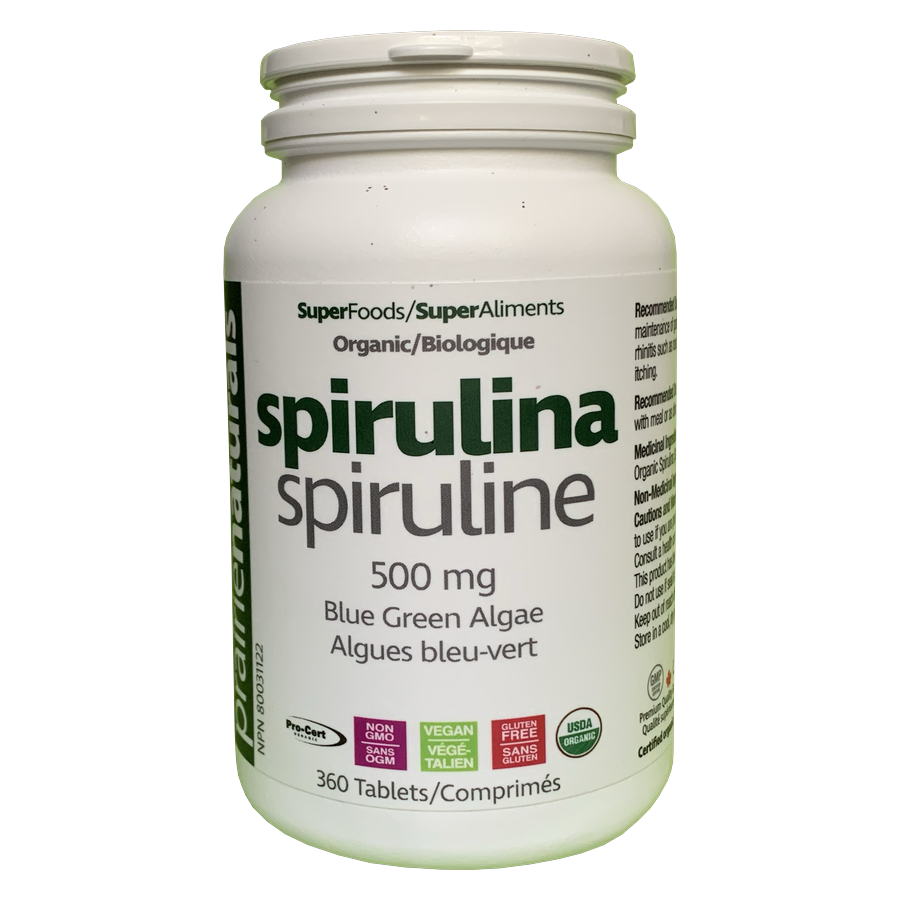
What spirulina is
Spirulina refers to edible cyanobacteria (often Arthrospira species) cultivated as a protein- and pigment-rich food supplement — tablets, powders, or flakes. It supplies amino acids, phycocyanin (blue pigment with antioxidant research interest), carotenoids, minerals, and small amounts of various vitamins depending on growth conditions.
Quantified composition example (dried spirulina)
Household figures below are scaled from USDA SR28 (same underlying USDA dataset historically shown on nutritiondata.self.com). nutritiondata.self.com was unreachable at edit time (DNS/server failure); NDB numbers are cited so values can be re-checked on nutritiondata.self.com when available, or via USDA FoodData Central.
- Seaweed, spirulina, dried — 1 tablespoon (7 g) (NDB 11667): protein ~4.0 g; iron ~2.0 mg; magnesium ~14 mg; calcium ~8.4 mg; niacin ~0.9 mg; vitamin C ~0.7 mg.
- Per 100 g dried (same NDB): iron ~28.5 mg; protein ~57 g; magnesium ~195 mg — illustrating nutrient density of the dried powder, not a suggested 100 g serving.
Treat spirulina as a food-like algae ingredient. Contaminated products are the main practical hazard — choose tested sources. B12 analogs in algae can confuse lab interpretation; do not assume spirulina replaces true cobalamin.
Cautions
Heavy metals and microcystin contamination risk with poor aquaculture — third-party testing matters. Autoimmune conditions: theoretical immune-stimulating concerns — clinician discretion. Phenylketonuria: check phenylalanine content. Start low if you are scent/taste sensitive; green tablets are an acquired habit for some.
References & further learning
PubMed and agency links are starting points; always read primary papers and consult professionals for personal decisions.