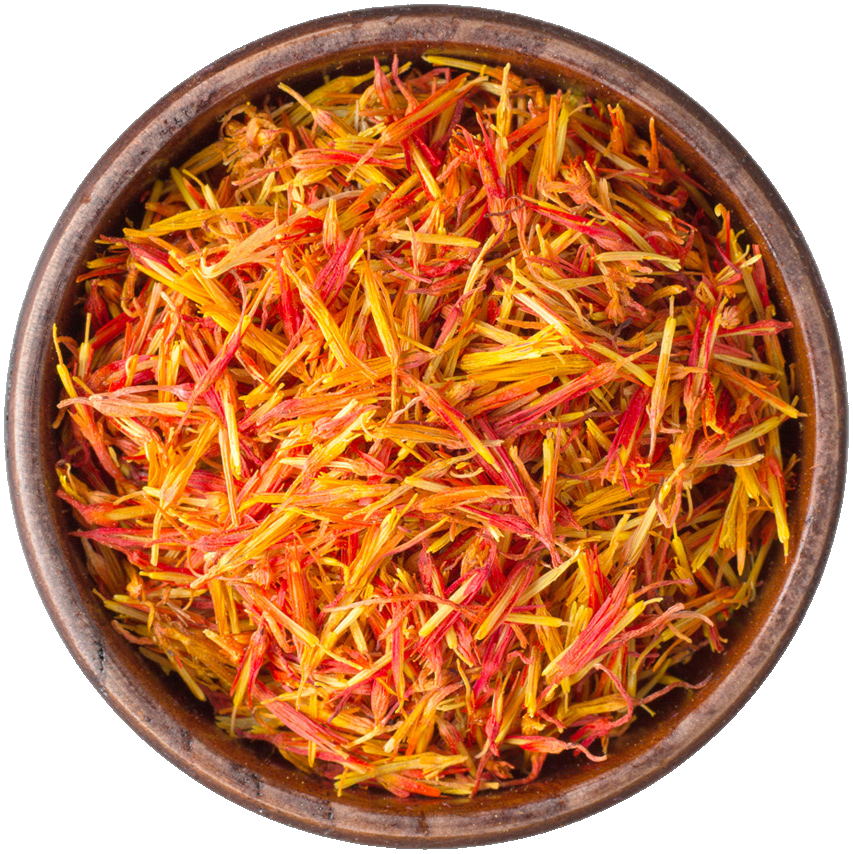
Saffron in wooden bowl

Stigma spice

Saffron

Crocus sativus

Hand-harvested Crocus stigmas — among the most costly culinary spices by weight; carotenoid pigments (crocin) give color and traditional mood/food folklore in nutritional literature.

← All spices Herbs library
Educational label — not a prescription. Culinary spices and kitchen herbs are discussed here as nutritional and traditional literacy — chemistry, history, quantified food composition, and orthomolecular/condition conversations found in Levy, OMNS, DoctorYourself, and related nutritional literature. This is not medical advice, not a claim that any spice cures disease, and not a reason to stop prescribed medicines. Essential oils are concentrated and are not the same as culinary pinches. Consult a qualified clinician before therapeutic use — especially if pregnant, on anticoagulants, have gallbladder/bile-duct issues, GERD, kidney disease, or allergies to related plants (e.g., Asteraceae for dandelion).

Orthomolecular / nutritional uses in the body

Saffron’s educational interest includes carotenoid pigments (crocin, crocetin) and safranal aroma. Orthomolecular and botanical-nutrition writers sometimes discuss mood and antioxidant folklore — always at culinary micro-dose scale, never as a substitute for mental-health care.

Conditions discussed in nutritional literature (education only)

  • Mood / affective folklore — discussed in some nutritional and botanical reviews; not a replacement for professional care.
  • Eye / antioxidant conversation — carotenoid literacy only; no disease claims.

Quantified nutrients

By weight saffron is used in milligram-to-pinch culinary amounts; mineral contribution is negligible compared with its pigment/aroma role. Adulteration (dyed filaments) is a quality literacy topic.

Historical & cross-cultural traditional uses

Hand-harvested Crocus stigmas shaped Persian, Kashmiri, Mediterranean, and Spanish rice/stew traditions. Historical medicine shelves listed saffron widely; modern education keeps culinary and supplemental extracts distinct.

Cautions

  • High-dose saffron extracts are not the same as a pinch in food; pregnancy caution appears in traditional and modern references for concentrated use.
  • Buy identity-protected threads when possible; powdered saffron is frequently adulterated.

References & further learning

  • USDA FoodData Central / historical SR28 spice composition rows — food-composition literacy.
  • Orthomolecular Medicine News Service (orthomolecular.org) — nutritional education context.
  • DoctorYourself.com / Levy nutritional literature — educational conversation, not protocols.
  • Traditional culinary herbals — historical use literacy only.