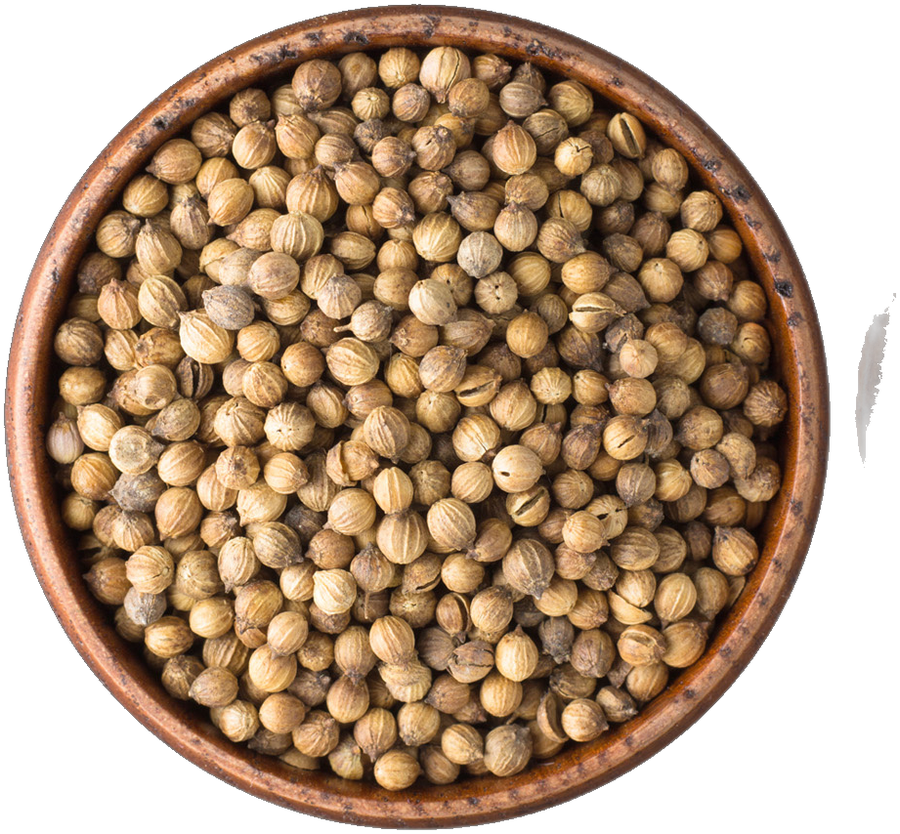
Coriander seed in wooden bowl

Seed spice

Coriander seed

Coriandrum sativum

Round citrusy seed of the cilantro plant — educationally used across South Asian, Middle Eastern, and Latin kitchens; composition tables track modest minerals per teaspoon.

← All spices Herbs library
Educational label — not a prescription. Culinary spices and kitchen herbs are discussed here as nutritional and traditional literacy — chemistry, history, quantified food composition, and orthomolecular/condition conversations found in Levy, OMNS, DoctorYourself, and related nutritional literature. This is not medical advice, not a claim that any spice cures disease, and not a reason to stop prescribed medicines. Essential oils are concentrated and are not the same as culinary pinches. Consult a qualified clinician before therapeutic use — especially if pregnant, on anticoagulants, have gallbladder/bile-duct issues, GERD, kidney disease, or allergies to related plants (e.g., Asteraceae for dandelion).

Orthomolecular / nutritional uses in the body

Coriander seed is discussed in nutritional education as a culinary aromatic with modest mineral density per household teaspoon (USDA spice tables). Orthomolecular writers more often emphasize whole-diet patterns than coriander isolates.

Keep culinary seed distinct from essential-oil doses. This page is literacy — not a protocol to treat disease.

Conditions discussed in nutritional literature (education only)

  • Digestive comfort folklore — traditional kitchen use in dals, curries, and pickling brines; educational only.
  • Metabolic / lipid conversation — some nutritional literature discusses coriander among culinary spices of metabolic interest; evidence quality varies; not a prescription.

Quantified nutrients

USDA-style ground coriander entries list small amounts of iron, magnesium, calcium, and potassium per teaspoon — useful for food-composition literacy, not megadose thinking.

Cross-check FoodData Central / historical SR28 coriander spice rows when quantifying recipes.

Historical & cross-cultural traditional uses

Coriander is among the oldest cultivated spices — Mediterranean and Near Eastern archaeology, Ayurvedic and Greco-Roman kitchen medicine, and global diaspora cuisines. Cilantro leaf and coriander seed are the same species used differently.

Cautions

  • Culinary amounts are generally recognized as food; concentrated oils and large supplemental extracts differ.
  • Allergy to Apiaceae (carrot/celery/coriander family) is possible in sensitive individuals.
  • Not a substitute for prescribed care.

References & further learning

  • USDA FoodData Central / historical SR28 spice composition rows — food-composition literacy.
  • Orthomolecular Medicine News Service (orthomolecular.org) — nutritional education context.
  • DoctorYourself.com / Levy nutritional literature — educational conversation, not protocols.
  • Traditional culinary herbals — historical use literacy only.