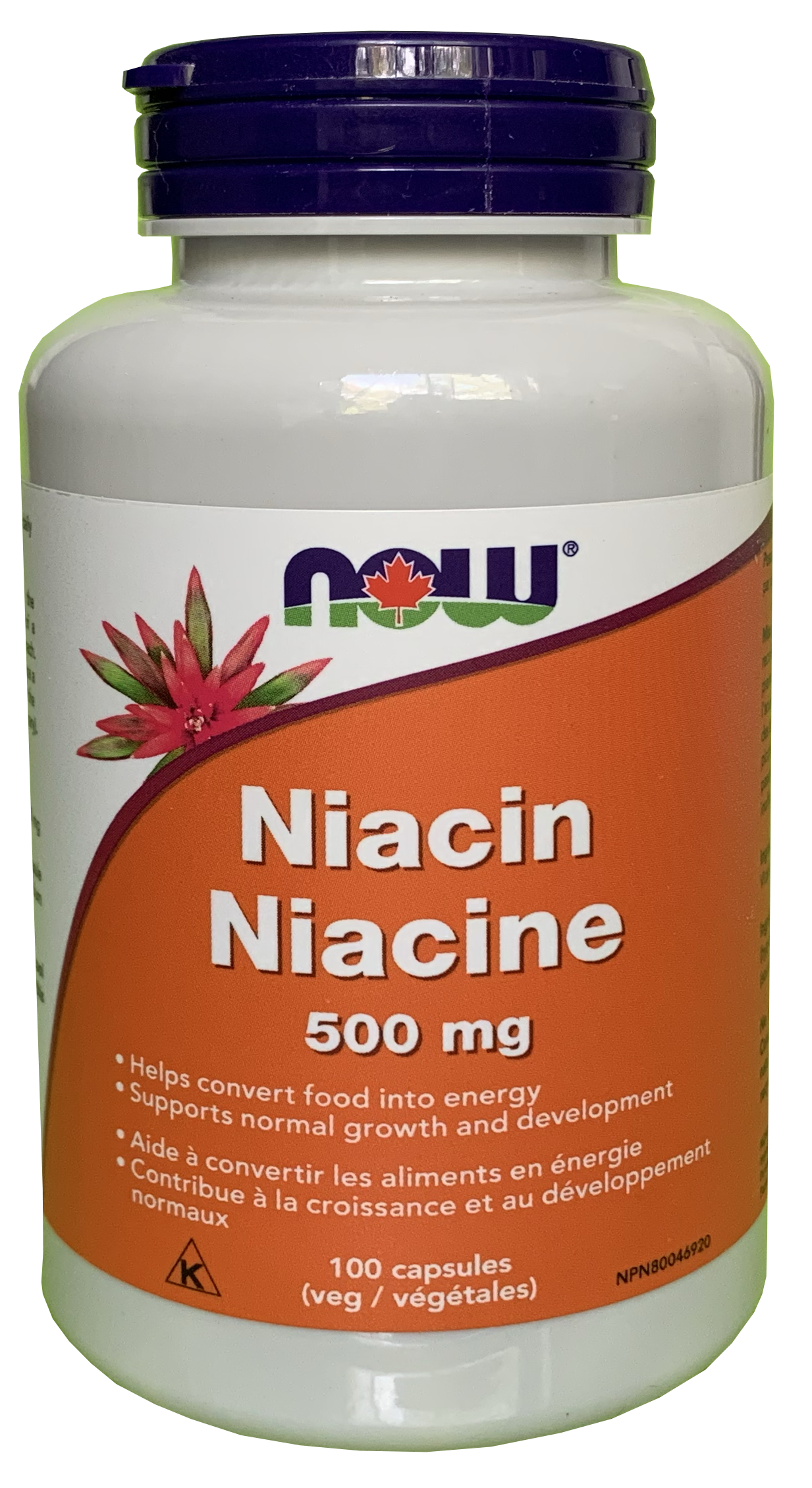
Niacin (B3) product

Foundation

Niacin (B3)

Educational overview — not a dosing prescription. Shelf examples: local no-flush illustration and precise AOR single Niacin No-Flush (inositol hexanicotinate).

AOR Niacin No-Flush ↗ ← My Protocol All supplements
Forms are not interchangeable. Nicotinic acid (flushing niacin), niacinamide, and inositol hexanicotinate (“no flush”) behave differently. Lipid-modifying doses of nicotinic acid are clinical pharmacology — not DIY.

What B3 is

Niacin refers to vitamin B3 compounds that yield NAD and NADP — central redox coenzymes for energy metabolism. Pellagra (dermatitis, diarrhea, dementia teaching triad) is the classic deficiency disease, now uncommon where diets are fortified.

Flush vs no-flush literacy

  • Nicotinic acid flush — prostaglandin-mediated vasodilation (warmth, redness, itch). Often mistaken for allergy; timing with food and gradual titration are historical practical tips — still clinician-guided at high dose.
  • Niacinamide — generally non-flushing; different research uses (skin, NAD support education); not a substitute for nicotinic acid’s lipid effects.
  • Inositol hexanicotinate — marketed no-flush; evidence that it replicates nicotinic acid lipid outcomes is weak — do not assume equivalence.

Orthomolecular context

Abram Hoffer and collaborators explored higher-dose niacin in psychiatric orthomolecular history. That lineage is part of educational culture on this site — labeled as history/perspective, not a mandate to self-treat mental health conditions with vitamins alone. Modern psychiatric care and monitoring remain essential.

Physiology depth

  • NAD / NADP cofactor chemistry — Niacin (B3) is required to build NAD and NADP, central electron carriers for hundreds of redox reactions in energy metabolism.
  • Glycolysis, Krebs cycle, fatty-acid synthesis — Textbook B3 dependency across macronutrient metabolism.
  • DNA repair / PARP educational angle — NAD is consumed by PARP enzymes in DNA-repair teaching; orthomolecular writers discuss higher needs under metabolic stress as literacy, not oncology treatment.
  • Flush vs non-flush forms — Nicotinic acid causes prostaglandin-mediated flush; niacinamide generally does not. “No-flush” inositol hexanicotinate is a different molecule — know what the bottle actually contains.
  • Lipid & psychiatric history in orthomolecular literature — High-dose nicotinic acid lipid trials and Hoffer-era niacin psychiatry are historical educational chapters — not DIY psychiatric or statin replacement protocols.

Quantified food sources

Household figures below are scaled from USDA SR28 (same underlying USDA dataset historically shown on nutritiondata.self.com). nutritiondata.self.com was unreachable at edit time (DNS/server failure); NDB numbers are cited so values can be re-checked on nutritiondata.self.com when available, or via USDA FoodData Central.

  • Turkey, roasted meat only — 3 oz (85 g) (NDB 05168): niacin ~8.1 mg; vitamin B-6 ~0.55 mg; selenium ~26 µg; zinc ~2.1 mg; protein ~25 g.
  • Tuna, light, canned in water — 3 oz (85 g) (NDB 15121): niacin ~8.6 mg; selenium ~60 µg; vitamin B-12 ~2.2 µg.
  • Peanuts, raw — 1 oz (28.35 g) (NDB 16087): niacin ~3.4 mg; magnesium ~48 mg; folate ~68 µg; protein ~7.3 g.
  • Chicken breast, roasted — 3 oz (85 g) (NDB 05064): niacin-rich lean protein; confirm exact cut on FDC/nutritiondata.self.com.

Cautions

High-dose nicotinic acid can affect liver enzymes, glucose control, and uric acid; timed-release forms have distinct hepatotoxicity discussions. Never combine aggressive self-dosing with unclear alcohol use or without labs. Shelf example: no-flush bottle on My Protocol is an illustration — know what form you are actually taking.

References & further learning

Video embed placeholder — see Orthomolecular playlist on the Videos page.

PubMed and agency links are starting points; always read primary papers and consult professionals for personal decisions.